MISSD Wishes a Happy Holiday to All
A season centered on awareness and reflection reminds us that recognizing suffering early can make all the difference.

A season centered on awareness and reflection reminds us that recognizing suffering early can make all the difference.
At MISSD, we regularly feature and amplify first-person accounts that illuminate the very real risks of adverse med effects—particularly the torment of akathisia and protracted withdrawal syndromes. Lori Daniels’ latest essay, ‘I Can Barely Breathe: The Journey Continues,’ is one such account. She was entangled in a system amid a circle of misdiagnosis—beginning with a coerced introduction to neuroleptics as a teenager and a cocktail of drugs that treated side effects with more side effects.
Her description of ongoing symptoms (akathisia, dystonia, myoclonic jerks, insomnia, and the sense that ‘breathing’ itself must be redefined) aligns with what countless others have reported when attempting to withdraw from long-term psychiatric drug use. Too often, these symptoms are dismissed or misattributed back to the original ‘disorder.’ We are grateful for voices like Lori’s and her full story that can help reduce these avoidable harms.
MISSD recently presented at the Washington, DC Psychotherapy Networker Symposium, delivering a Lunch & Learn session focused on the recognition and risks of akathisia.
Akathisia is a serious and often unrecognized medication-induced disorder associated with profound distress and potentially life-threatening outcomes. Early identification remains critical to improving patient safety. During the session, MISSD provided education on:
In addition to the presentation, MISSD maintained an exhibit presence throughout the symposium, engaging with thousands of attending clinicians and distributing educational materials to expand awareness of medication-induced harm.
MISSD also highlighted its free accredited online courses, developed to support clinicians, patients, and caregivers in recognizing akathisia and improving safety outcomes.
Register for the courses at MISSD.LearnUpon.com
MISSD continues its national and international efforts to advance recognition, education, and prevention of medication-induced harm that can cause self-harm, violence, and suicide.

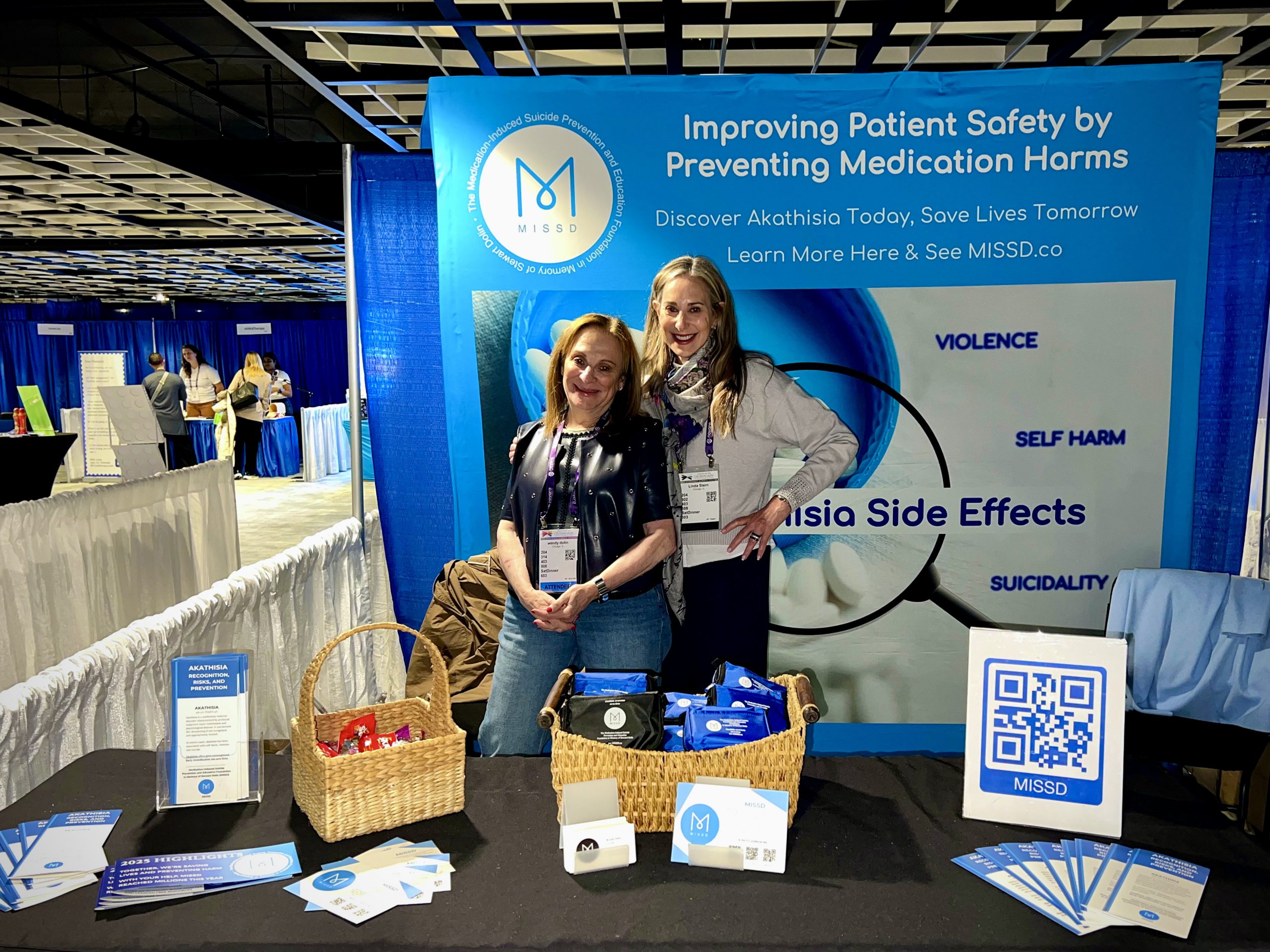
MISSD founder, Wendy Dolin, and therapist Dr. Linda Stern prepare to greet symposium attendees and share MISSD’s educational resources.
It’s National Adverse Drug Event Awareness Day and an appropriate time to highlight key protocols to improve patient safety. See our latest Akathisia Stories podcast, new Understanding Akathisia video and take our free courses. Read our press release and follow the links here: https://www.einpresswire.com/article/901408014/medication-reactions-often-missed-and-misdiagnosed-experts-warn
The U.S. FDA has issued a warning letter to Novo Nordisk citing incomplete reporting of postmarketing adverse events associated with semaglutide (Ozempic, Wegovy), including serious outcomes such as deaths and a suicide.
While causation has not been established, incomplete reporting can delay recognition of potential medication-induced harms. MISSD previously highlighted emerging reports of psychiatric effects associated with GLP-1 medications, including akathisia, anxiety, and medication-induced suicidality:
https://missd.co/a-popular-weight-loss-drug-is-being-associated-with-medication-induced-suicidality
What to monitor:
Recommended actions:
MISSD supports informed decision-making, transparency, and education to improve patient safety. Take our free courses and see our educational resources available via the “Resources” link at the top of our website.
Research from Queen’s University Belfast, reported by The Mirror, analyzed more than 14,000 dementia cases in Northern Ireland and found antidepressant use associated with a slight increase in mortality risk. Anti-anxiety medications showed a stronger association.
The medications mentioned include commonly prescribed SSRIs such as sertraline, citalopram, and fluoxetine.
While these medications help many patients, the findings underscore the importance of careful prescribing and regular medication reviews, particularly among vulnerable populations.
Adverse reactions such as akathisia—a medication-induced disorder characterized by profound subjective inner restlessness and psychological distress—can be overlooked and misattributed to underlying illness.
MISSD continues to advocate for greater awareness of medication-induced akathisia and informed prescribing practices. Learn more through MISSD’s free online courses. Enroll at MISSD.LearnUpon.
Read the full article:
https://www.mirror.co.uk/news/health/new-warning-taking-drugs-like-36834321
A recent opinion piece in Psychiatric Times suggests that concerns about the “toxic” effects of psychiatric medications are often overstated.
At MISSD, we recognize that psychiatric medications can help many people. At the same time, discussions about medication safety should not overlook well-documented adverse effects such as akathisia—a medication-induced disorder that has been linked to self-harm, violence and suicide.
Because akathisia is frequently misdiagnosed as worsening anxiety or depression, greater awareness, careful monitoring, and clearly communicated risk information remain essential for patient safety. Take our free courses at MISSD.LearnUpon.com to be safer and better informed.
Akathisia awareness and education reduces harm and saves lives.
The Royal Australian College of General Practitioners (RACGP) has published guidance on when psychotropic medications should be deprescribed — particularly when risks outweigh benefits,
Prescribing is not a one-time decision. It requires regular review, patient involvement, and adjustment when necessary. This is critical to preventing medication-induced harm.
Antidepressants, antipsychotics, and anti-anxiety medications can cause akathisia — and akathisia can precipitate out-of-character self harm, violence, and suicide.
We encourage clinicians and patients to read the RACGP article and make medication review part of routine care. Read the full article at: https://www1.racgp.org.au/newsgp/clinical/when-is-deprescribing-psychotropic-medications-app.
A recent feature by RxISK presents a striking contrast.
Viewers first see a promotional video produced about isotretinoin, focused on benefits. RxISK then recreates that same format and structure — but highlights what is often minimized or omitted: reports of mental health problems, suicidality, and persistent sexual dysfunction associated with the drug. These adverse effects have nothing to do with the patient’s underlying mental health or situational life challenges.
RxISK refers to these harms as medication-induced toxicity — adverse effects that can alter lives.
Patients and families deserve clear information about all significant risks, especially when medications have been linked to severe psychiatric reactions, including akathisia.
We encourage healthcare providers, consumers and caregivers to watch both videos and consider what meaningful information should be provided about medication risks prior to prescribing.
Read and watch here: https://rxisk.org/isotretinoin-and-consent/.
A recent report highlights a growing concern: many older adults are remaining on antidepressants for decades without regular review. In the UK, more than one in five adults over 65 now take these medications—double the rate from 20 years ago. Experts warn that prolonged use in older age can increase risks, including falls, memory problems, sexual dysfunction, and agitation. The report also describes withdrawal symptoms such as restlessness and insomnia.
What is not mentioned is withdrawal akathisia. Akathisia is a medication-induced disorder marked by intense inner restlessness and agitation. It can emerge when stopping, starting or changing drug dose or type. During withdrawal, akathisia is often mistaken for relapse or “worsening depression,” leading some patients to remain on medication indefinitely.
Most SSRIs were studied in short-to-medium term clinical trials, not long term use. Regular reassessment, informed consent, and gradual tapering when appropriate are especially important for older adults, who may be more vulnerable to adverse effects.
MISSD offers free educational resources to help clinicians, patients, and families better recognize and prevent medication-induced akathisia. Take our courses at MISSD.LearnUpon.com.