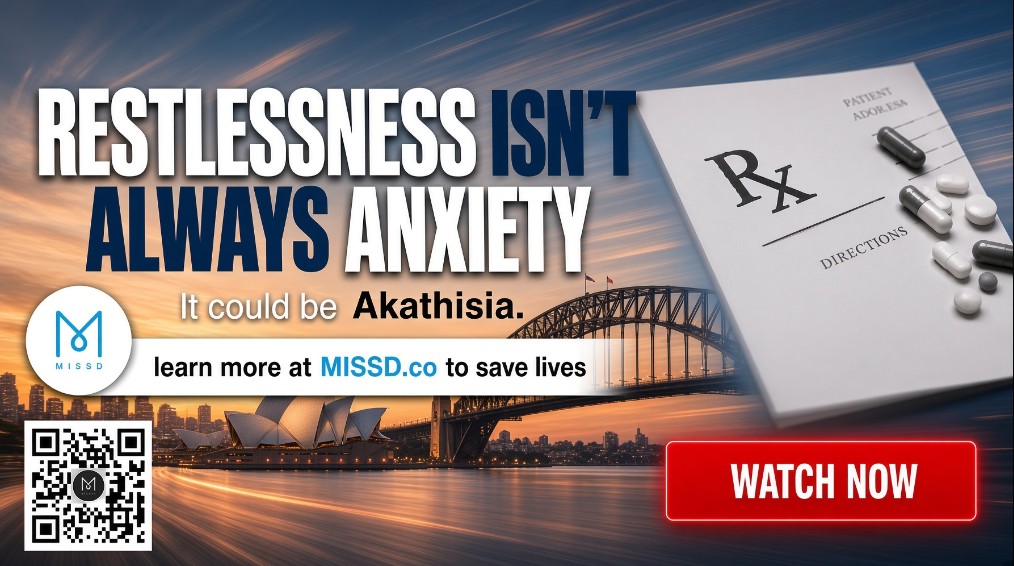
Our first TV ad brings awareness to a wider audience—because recognizing medication-induced akathisia starts with knowing the name and the symptoms. Watch and share at https://www.youtube.com/watch?v=RovBJ8dNxe0.
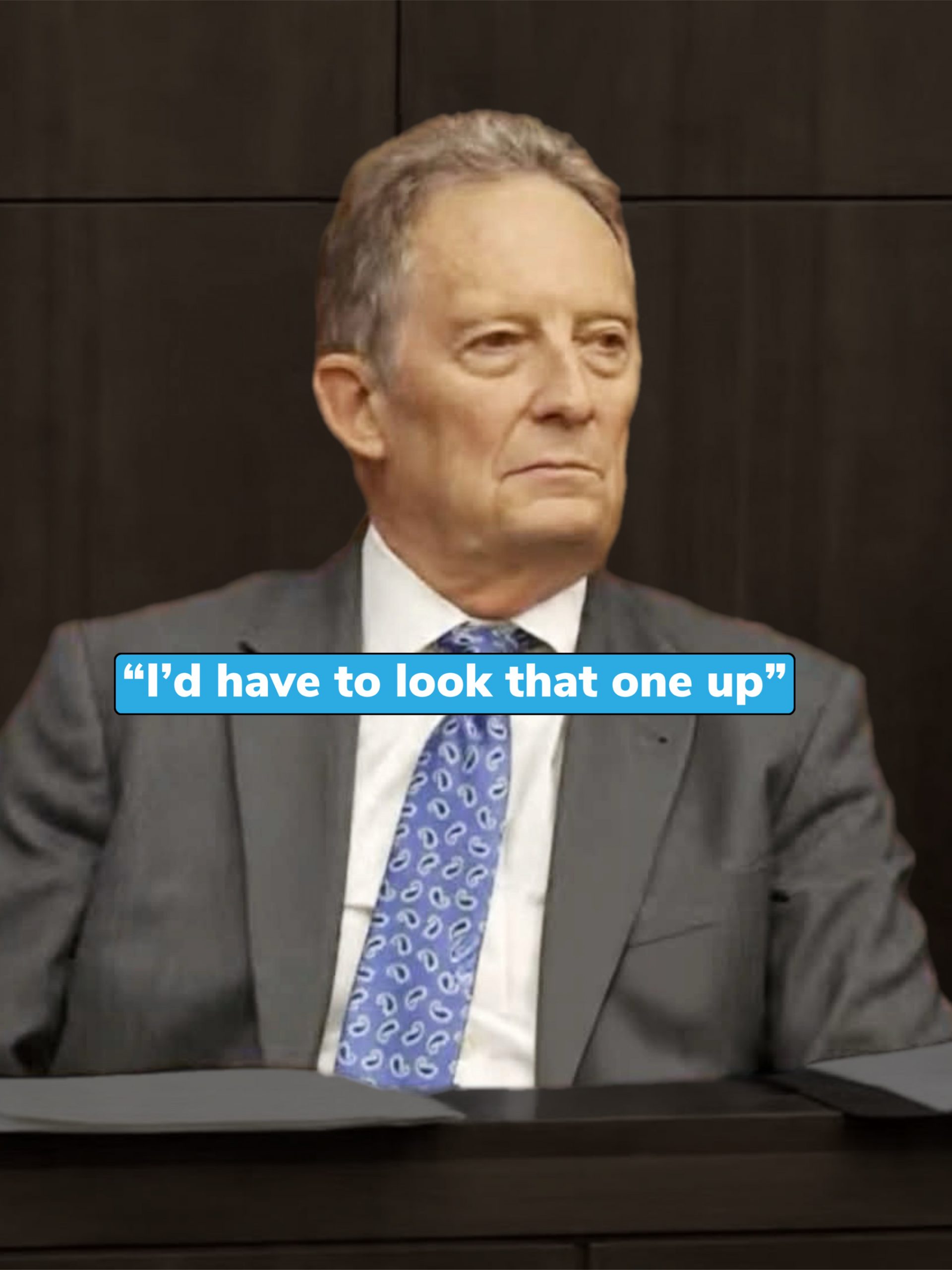
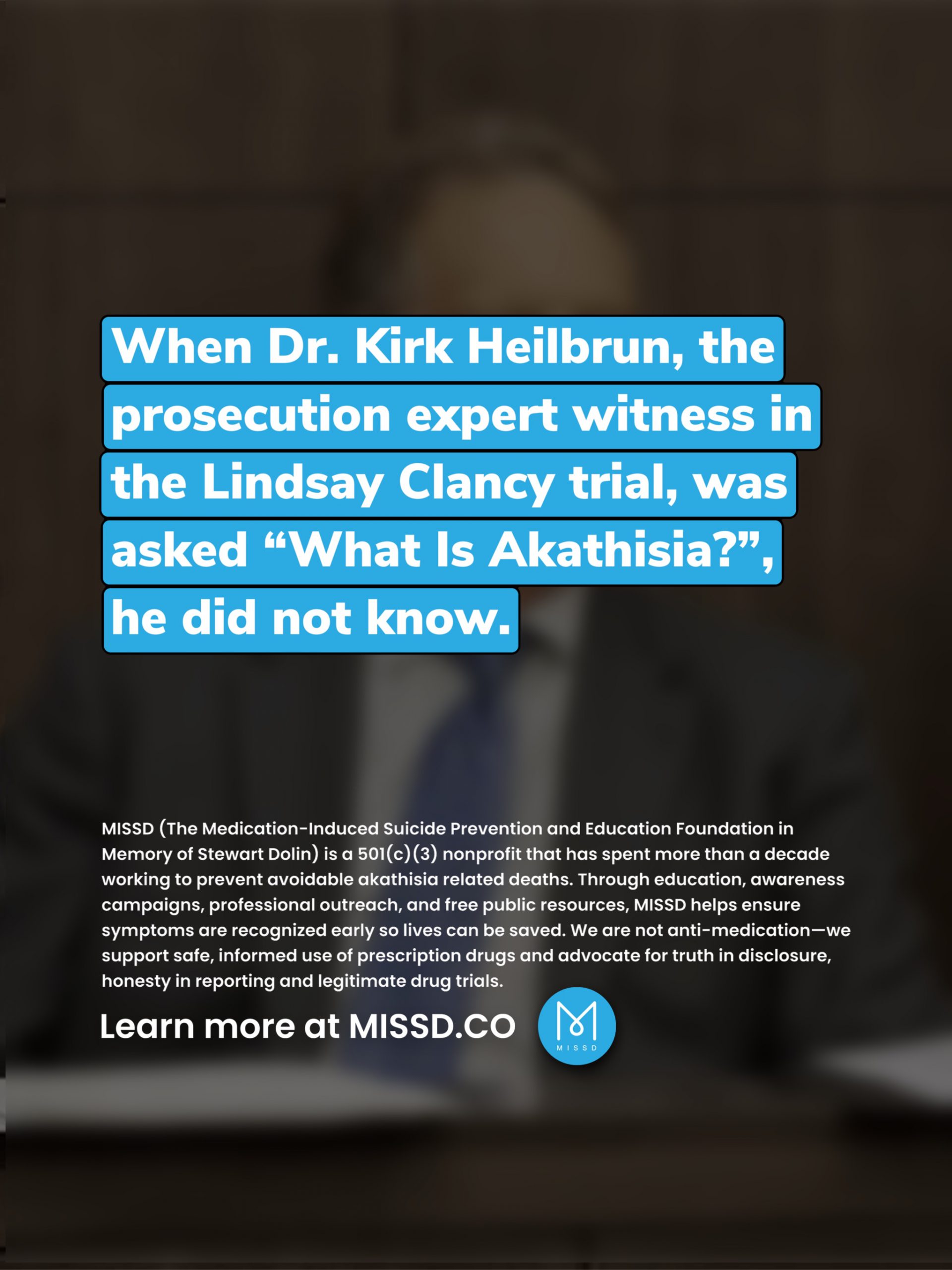
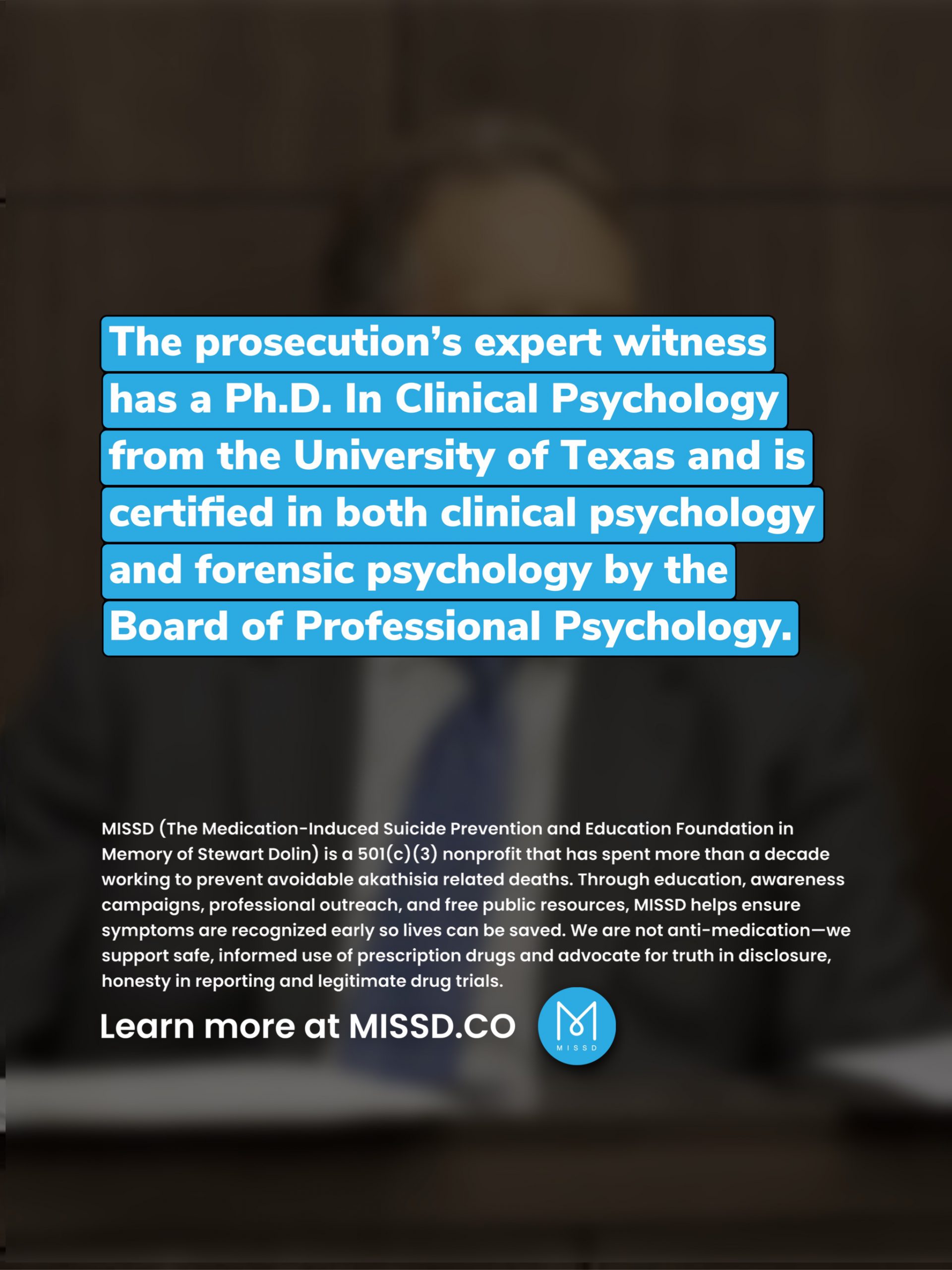
The Lindsay Clancy trial has raised important questions about medications, adverse effects, and changes in thinking and behavior.
It’s an appropriate time to remind people that akathisia can precipitate self-harm, violence, and suicide. Yet, it is still too often missed or misunderstood. That’s our key point today, and it’s not a commentary on tragedy and specific trials.
Healthcare professionals, patients, families, and caregivers all need to know what akathisia is and how to recognize it. This 10-slide overview looks at akathisia in the context of the Clancy trial and shares information that can help close the knowledge gap.
This moving essay tells one family’s story of akathisia and related medication harm, missed warning signs, and the advocacy it took to have concerns heard.
When a patient’s condition changes after a medication is added, increased, reduced, or stopped, the possibility of an adverse drug effect must be taken seriously.
Our latest episode of Akathisia Stories features Lisa Acquaviva who joins MISSD to discuss cancer, recovery, drug safety, and the power of safe-patient advocacy.
After navigating metastatic colon cancer and extensive medical treatment, Lisa began seeking answers about her experience and connecting with others affected by polypharmacy, akathisia, and other medication-related adverse effects. Tune in to hear what she learned about asking questions, recognizing symptoms, and becoming an active participant in her own care.
Cael explains what thousands of others have experienced: akathisia and related adverse drug effects can disconnect a person from their own emotions, values, needs, identity, or sense of purpose. Drugs that cause emotional blunting can numb all emotions, not just feelings of sadness.
From the outside, akathisia can initially appear invisible — but the impact is very real. In this short clip, Katinka Newman, author of The Pill That Steals Lives, reflects on her terrifying journey through prescribed harm. Listen to the full episode at: https://www.youtube.com/watch?v=p_L9vbzE_c8&t=126s.
Florida’s new guidance cautions against psychotropic medications for children ages 5–17. It recommends comprehensive evaluation, psychotherapy first, and attention to sleep, screen time, nutrition, physical activity, and stressors before medication.